
The short answer
Research supports directional claims developers can use: interruptions and task switches tend to raise errors and time-to-completion on demanding work; unpredictable sound pushes some people toward masking or consistent low-information audio; lyrics and complex foreground audio often hurt verbal-heavy coding tasks. None of that replaces team design—but it explains why the same engineer feels “fine” on one day and “fried” on another.
What this page is (and is not)
This is a reading map across NEDIO’s existing research articles. It avoids duplicating their full argumentation so search engines and readers see a clear hierarchy: synthesis here, depth in the linked hubs.
It is not a meta-analysis in the statistical sense. We are not pooling effect sizes across heterogeneous studies here. We are translating directional findings into a practical scaffold for engineers who need to decide what to try first when the day feels fried.
How to use this synthesis
Start by writing down your last bad focus day as three columns: calendar events, room sound, and what was in your ears. Whichever column has the most “random surprises” is usually the first strand to read deeply.
Second, pick one intervention for a two-week trial. If you change headphones, playlists, meeting policy, and timer length simultaneously, you will attribute success or failure to vibes.
Third, connect evidence to tooling only after the diagnosis is honest. If meetings fragment you, a new playlist cannot carry the full fix. If unpredictable noise spikes your stress, better headphones or masking may help before you tune Pomodoro length.
Recommended reading order
- Context switching and recovery — if your day dies to meetings, pings, and reload cost.
- Noise, masking, and unpredictable sound — if the room is the variable more than your willpower.
- Best music for coding — if you are tuning lyrics, lo-fi, white noise, and volume.
- Measurement and self-report pitfalls — before trusting vendor “science” summaries.
- Lyrics vs instrumental for coding — when you suspect vocals interact with reading and naming load.
- Focus habits, breaks, and interval design — when you are tuning block length and recovery, not acoustics.
Three evidence strands (how they connect)
Interruptions and switching dominate when your mental model is expensive to rebuild—debugging, distributed systems work, or learning a new codebase. Protecting blocks reduces voluntary fragmentation; it does not erase external interruption.
Noise and masking matter when attention is hijacked by variability you did not choose—side conversations, HVAC cycles, coffee grinders. Headphones then become a wall against surprise sound, not a motivation meme.
Music and verbal load matter when your ears carry semantic information that competes with reading, naming, and API design. Instrumental or quieter backgrounds are usually the safer default—not because “lo-fi makes you smart,” but because they reduce a predictable channel conflict.
These strands interact: interruptions increase the cost of refocusing; noise increases the difficulty of maintaining focus; complex audio increases the competition for verbal bandwidth. A bad afternoon can include all three, which is why “one weird trick” marketing feels hollow in real offices.
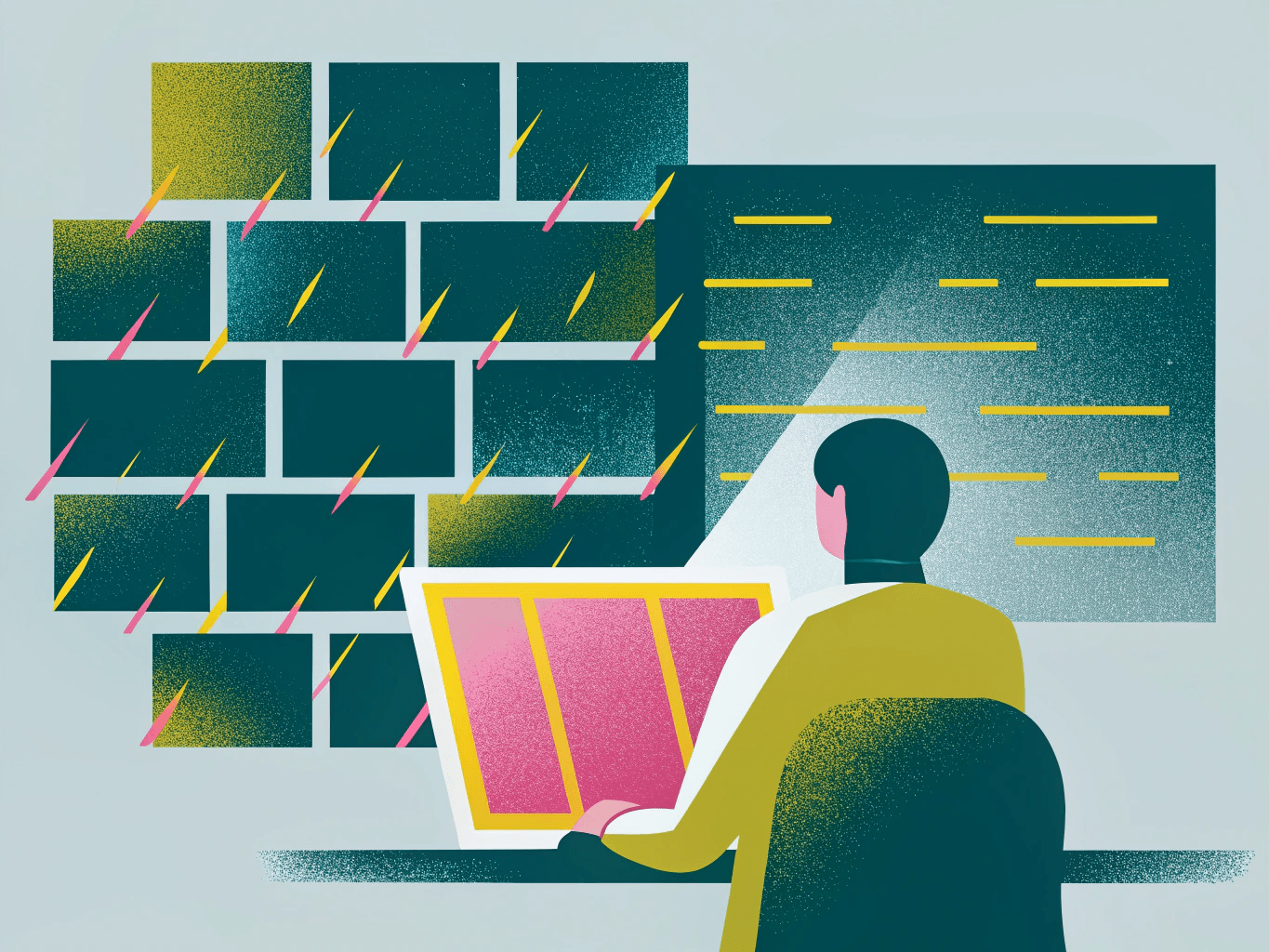
One engineering day, three problems
Morning: standup fragments your first block—interruption strand. Afternoon: open office noise spikes during a bug hunt—noise strand. Evening: you read a design doc while bass-heavy vocals pull at language—audio strand. The research picture is not “install one app”; it is “match the intervention to the dominant failure mode hour by hour.”
Workflow tools that bundle a timer and calm instrumental audio can help with starting and boundary; they do not replace institutional fixes for overload. See why developers lose focus for a non-magical workflow lens.
If your calendar is structurally hostile, the honest output is coordination work: fewer handoffs, clearer ownership windows, and explicit maker blocks—not a longer playlist.
Sprints, tools, and honest limits
Bounded work blocks interact with interruption risk: shorter blocks recover faster after a ping, while longer blocks protect reload-heavy tasks—until the first meeting shatters them. See best sprint length for coding for a developer-native interval discussion tied to task types.
When you are ready to shop categories—not lab citations—use coding focus music tools and alternatives and best coding timer apps for developers. Those pages exist precisely because evidence pages should not pretend to be buyer guides.
Limits of the evidence
Lab tasks, student populations, and short sessions do not automatically transfer to senior engineers shipping under incident load. Keep claims modest; measure your own sustainable depth where possible.
Industry self-report is biased by novelty, social identity, and good days. That does not make it worthless—it means treat testimonials like hints, not proofs. Pair qualitative comfort with lightweight quantitative checks: commits, reviews completed, or tickets moved, measured across weeks not hours.
Practical takeaway
- Reduce voluntary switches before you optimize playlists.
- Use masking when surprise sound is the dominant stressor.
- Default to low-information audio when language load is high.
- Read the deep articles above instead of trusting one-page “science summaries.”
- Separate calendar design from headphone design: meetings are not a firmware problem.
- Run two-week trials with one variable at a time; write one line of notes per day.
- When shopping tools, pick category first—timer vs audio vs sprint bundle—then compare brands.
Frequently asked questions
Is this page a substitute for the context switching article?
No. The context switching article is the canonical deep dive on reload cost, voluntary vs external switches, and protected blocks. This synthesis links into it and summarizes how that strand connects to noise and audio complexity. If you only read one deep article this month, pick the strand that matches your worst day—not this overview.
Do I need to read every linked article?
Use this page if you want orientation. Read the specialized articles when you are optimizing a specific layer: calendar and interruptions, room acoustics and masking, or music and verbal load. If you try to read everything at once, you will likely change twelve variables and learn nothing stable.
Does research prove a best Pomodoro length?
No universal law. Interval design interacts with interruption risk and task type; see the sprint-length guide and the focus habits article for bounded-work evidence without mythologizing one number. Treat any “optimal interval” claim that ignores your meeting load and your task family as marketing, not engineering.
Where should I read about hype and measurement?
See measurement and self-report pitfalls—especially before buying strong “neuroscience” marketing claims about playlists. Self-report feels true and can still mislead when tasks, sleep, and stress covary.
How does this relate to buying focus apps?
Evidence explains levers; products implement rituals. After you name your failure mode, use compare pages for shopping maps—coding focus music tools, Brain.fm alternatives, Endel alternatives, and best coding timer apps—without pretending a purchase replaces calendar design.
What about ADHD-shaped developer days?
This synthesis stays evidence-general. For workflow ergonomics framed as non-medical guidance, read ADHD-friendly focus apps and focus music for ADHD developers—then return here to connect those levers to the research hubs.