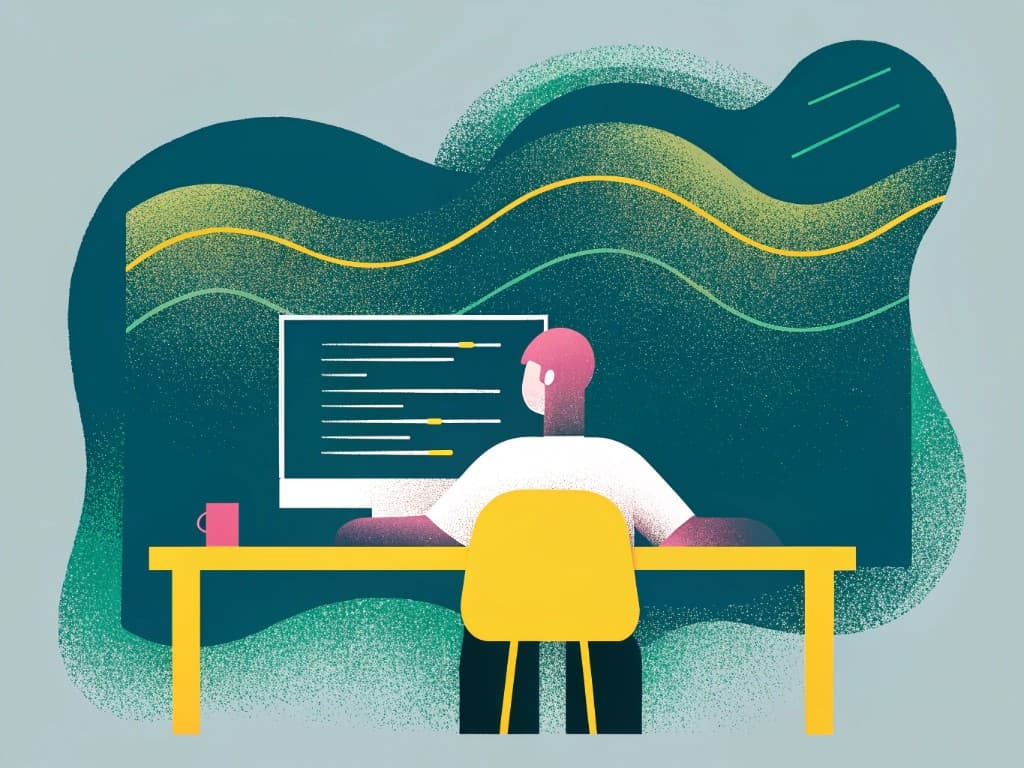
The short answer
Study-mode audio often biases low dynamics, emotional comfort, and long sessions of passive intake—great for textbook loops, risky when you need tight coupling between editor and runtime feedback. Implementation-mode audio should bias predictable texture, minimal linguistic load, and fit with short test cycles—music supports motor persistence without becoming a second task. If your “study playlist” sedates urgency during crunch, swap lanes.
How this differs from “lo-fi beats to study to”
Streaming culture optimizes watch time—fine for students; developers need to optimize integration risk. See lo-fi streams vs sprint-first instrumental for UI critique, then return here for cognitive-fit critique.
Comprehension vs implementation load
Comprehension-heavy blocks—new language, architecture onboarding—compete for verbal working memory like studying prose; layering lyrics resembles studying with talk radio. Implementation-heavy blocks—translate spec to deterministic code—still verbal internally but may tolerate more groove when the path is clear.
Mixed-mode days are normal: morning reading (quieter audio or silence), afternoon implementation (steady instrumental)—explicit switches beat one marathon playlist pretending fit.
Verbal channel competition
Both studying and coding use language internally—hence lyrics cost often exceeds zero. The irrelevant speech effect applies broadly. Study mixes that sneak vocals through “because I tune them out” may still tax code reading—you only notice when comprehension collapses at page seventeen of a spec.
What breaks when you reuse study mixes
Over-calm: shipping needs neither panic nor sedation—sometimes mellow tracks remove edge needed to finish tedious but critical work.
Novelty variance: study streams may front-load emotional arcs; CI failures want monotonic texture.
Hidden lyrics: acoustic covers sneak words—select instrumental or unfamiliar-language strategies intentionally, not accidentally.
Routing rules of thumb
If reading dense docs or specs: silence, noise, or minimal instrumental—often slower energy than “study beats.”
If shipping repetitive code with tight tests: steady instrumental; timer visible—NEDIO’s lane.
If learning while building spikes: oscillate modes deliberately—see four kinds of focus for vocabulary to plan switches.
Student habits vs industry accountability
University study streams optimize for hours seated and emotional soothed before exams—outcomes are private GPA and stress narratives. Industry engineering ties audio choices to multi-team blast radius: skipped edge case from tired reading costs more than one quiz mistake. The aesthetic similarity of “focus playlist” hides accountability gradient—you owe tests, observability, and empathetic code review, not only mnemonic comfort.
That does not mean joyless work—it means deliberate channel routing. Keep nostalgic study tracks for breaks; protect implementation blocks with textures aligned to motor persistence and predictable CI signal.
Mentorship note for senior ICs
Juniors often replicate mentor vibes literally—if you joke that “I only ship with lo-fi,” they may cargo-court that norm against tasks requiring silence. Model explicit reasoning: “I use noise during open office hours, silence for security review.” Verbally annotate your audio policy during pairing so cultural transmission carries mechanism, not brand loyalty.
When coaching adoption of sprint timers, acknowledge study-mode muscle memory—gentle migration beats aesthetic shame.
Bootcamp graduates and context switches
Accelerated programs compress study-mode conditioning: endless tutorials with upbeat playlists, then suddenly industry demands implementation rigor under observability pressure. The audio whiplash is real—coach explicit channel switching early: “Morning = read internal wiki quietly, afternoon = ship tests with instrumental sprint stack.” Without naming the mode shift, newcomers misapply study mixes during incidents or blame themselves for “losing focus” when the task was always comprehension-heavy.
Competitive programming vs production engineering
Contest environments prize rapid puzzle solving under time pressure—often paired with high-energy tracks for arousal. Production engineering prizes maintainability, incident discipline, and collaboration—musically closer to steady implementation lanes with occasional comprehension-heavy silence for design. Engineers with CP backgrounds may default to adrenaline soundtracks during refactor work where calm analysis wins—explicitly relabel sessions when switching domains.
Open-source maintainership introduces yet another mode: triage of issues, empathy in comments, and roadmap negotiation blend reading and writing socially. That hybrid may resist both pure study streams and pure implementation loops—consider low-information noise or silence when emotional bandwidth competes with linguistic parsing of frustrated users. Soundtrack cannot substitute CODE_OF_CONDUCT enforcement or humane issue templates—pair audio modesty with communication skills.
Research writing vs implementation coding
R&D roles split time between literature review, RFC drafting, and prototype commits—each chunk wants different audio. Literature review behaves like studying: dense PDFs, marginalia, citation chains; favor quiet or non-lyrical textures so argument comprehension stays primary. RFC writing blends persuasion with specification; avoid podcasts in the same language as your prose—you will borrow phrasing unconsciously or fight dual linguistic streams. Prototype hacking tilts implementation: steady instrumental lanes help motor persistence when you already know target architecture.
Thesis-style writing in English while thinking in another language adds translation overhead analogous to coding while lyrics run—stack fewer verbal channels when drafting will face legal or exec scrutiny. Pair editing passes with silence for tonal coherence; reserve energetic playlists for mechanical refactors after substance locked.
Field research notes (user interviews, incident timelines) deserve the same mode honesty as exam flashcards: synthesis pass is comprehension; ticket breakdown afterward is implementation. Mislabeling interview synthesis as “just coding” invites wrong soundtrack and skimmed empathy. Name the artifact you are producing, then route NEDIO timers and audio lanes to match.
Legacy domains, archaeology, and study-mode honesty
Brownfield systems force archaeology—reading decade-old queries, commit archaeology, tribal knowledge in Slack exports. That work is closer to historical scholarship than greenfield feature typing; treat blocks as study sessions with quieter audio and frequent note-taking, then schedule separate implementation sprints with instrumental lanes once mental model stabilizes. Mixing modes mid-hour is how subtle bugs enter migrations.
Vendor SDK docs vary wildly: some read like exams (dense), others like blog tutorials—resize audio policy per vendor, not per project title. If SDK reading requires bilingual errata hunting, you are emphatically in comprehension territory; energetic coding mixes will fragment careful parsing.
Strangler fig refactors explicitly alternate “read old world” with “write adapter”—alternate soundtracks on those boundaries too; calendar color alone rarely suffices—explicit mode labels in ticket descriptions help future you (“COMPREHENSION—do not ship”) versus (“IMPLEMENTATION—timer on”).
Open-source spelunking through forks and abandoned issues feels like research because it is research—cargo-cult study-to-implementation ratios from TikTok will mislead here. Budget longer quiet sessions than startup greenfield onboarding; archaeology rewards patience, not BPM.
When LLMs summarize legacy code, you still owe verification reading—treat verification as comprehension-heavy; treat patch application as implementation. Different audio defaults reduce risk that you skim plausible-but-wrong AI summaries with hyped-up techno blasting.
Conference recordings and university lectures straddle modes—you watch talks for facts (study) but also sketch integration plans (proto-implementation). Split sessions: first pass with transcript and silence for facts; second pass with steadier instrumental when converting notes into repo artifacts; never blend passive listening with active typing expecting both to succeed simultaneously without tab debt.
Certification cramming resembles studying but ships different stakes—exam failure is reversible; production outage is not—treat on-the-job learning after certs as implementation-first even if the exam vendor sold you lo-fi beats—workplace audio policy must follow incident responsibility, not classroom habit.
Mob debugging sessions blur modes—you collectively read logs (study) while editing patches (implementation)—default to low-verbal-challenge audio or silence so group comprehension stays aligned; solo optimizations rarely transfer when four engineers parse the same stack trace under mismatched sound fields.
Technical screen interviews mimic studying under stress—candidates often rehearse with upbeat tracks yet real loops favor clear verbal narration; hiring managers should specify whether pairing expects headphones or silence so evaluation matches future team norms rather than theatrical leetcode theatre alone.
Frequently asked questions
Is studying and coding never alike?
They overlap when learning new frameworks—then comprehension share is high. Diverge when implementation dominates keystrokes.
Can lyrics work?
Sometimes for rote editing—rarely for dense reading; see lyrics vs instrumental research.
What about exams vs deadlines?
Both stress—yet exam audio often maximizes mellow; sprint delivery may need steadier forward rhythm.
Instrumental always?
Default instrumental for mixed-mode developer days; adjust with evidence from your diffs.